Virtual Reality Patient Healthcare is Not a Game

Monday

14

Jul

The fruits of many an unexpected invention accompany us everyday.

The inventions of medical scientists, pioneers and visionaries are responsible for items such as X-Rays, Penciliin, Viagra, Listerine, Propecia, and the Pacemaker to name a few.

It’s a phenomenon not limited to the medical field, take for instance the discovery of Saccharin, Dynamite, Matches, Coca-Cola, and Microwave Ovens.

Indeed technology does not need to be limited to the inventors original intended use for it to become inspiringly useful by enterprising users.

Inventors of the technology often understand that it’s the nascent users and developers who will test, experiment, break and fix things in the process of discovering expanded potential of their invention.

Clinical use of Oculus VR

In a non gaming use of Virtual Reality, the Hospital Perpetuo Soccorro last week took the bold step of publicly trialling this gaming technology to appease operative anxiety for a patient under local anaesthic.

While VR is not a substitute for local anaesthetic, in this scenario the patient was greatly assisted by the calming effect of listening to Mozart while being immersed in a super moon lit beachside paradise, gazing up at distant fireworks.

To underline the commitment to new technology, the hospital – which is also combining Doctor’s access to EHR with wearables such as Google Glass – POV streamed the operation through Google’s infamous wearable smart glasses to YouTube.

All while the doctor conducted a knee arthroscopy in the operating theatre with all the inevitable accompanying local environmental stress that typically entails for a patient.

Contrast the stark physical reality of a classic functional hospital ward where we entrust professionals to attend to our health with the comforts of a typical spa where our wellbeing and feel good factor is of paramount importance.

Virtual Reality can go some way to bringing those worlds together and having a positive clinical benefit to the patient.

Clinical Pain Management

According to Fortune, in a collaboration with Stanford’s Department of Anaesthesia, Jeremy Bailenson, director of Stanford University’s Virtual Human Interaction Lab, Virtual Reality technology was used to place children with chronic regional pain syndrome (CRPS) — a disease characterized by severe pain, swelling, and changes in the skin – in virtual simulations that divert their brains from unpleasant physical therapy and treatment distracting them from processing pain signals.

Such research is by no means recent. The University of Washington Seattle and U.W Harborview Burn Center have been exploring the immersive virtual reality pain distraction since the early 1990’s.

Droiders last week also launched Glassware for dentists (spanish version), where once again the hands free contextual unobtrusive line of sight information, is proving highly beneficial to dental professionals.

In this instance the Oculus VR was not featured for the patient as there are practical issues, however other researchers have shown recently that other Virtual Reality headsets can have a clinical advantage in dentistry.

When technology breaks out of from it’s crowdsourced origins it frequently attracts critiscm from many quarters as witnessed with the recent acquisition of Oculus.

asdasd

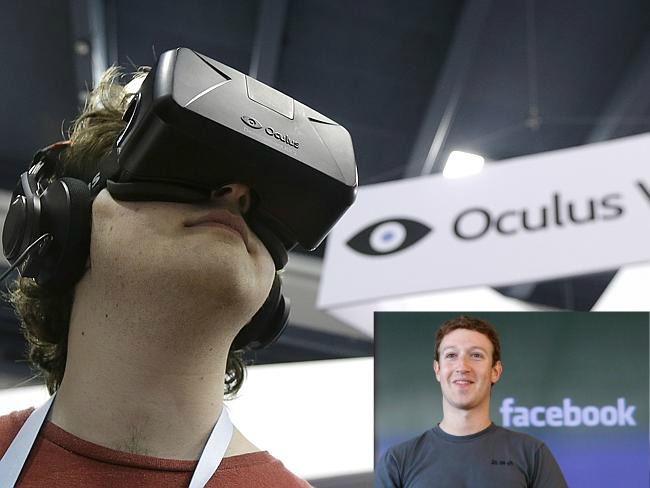
Facebook recently acquired Oculus VR for $2billion – will healthcare feature in future plans?

#notagame

However the promise for VR in healthcare and indeed beyond it’s gaming roots is a compelling one.

After all, rules that are stretched and technology that gains use beyond it’s intended usage is potent.

And yet for all last week’s #notagame I was struck by comments received in private by tech editors in relation to this announcement, declining to cover it.

I’m unsure if that’s Valley nimbyism, a friday sub optimal announcement timing, the fog of football, or if tech reporting decidingly lapses to potato salad level of reporting in some quarters.

Read coverage of Patient Healthcare with Virtual Reality from MD+DI and The Guardian. En español, lea la cobertura de la noticia en El Confidencial, Las Provincias, Real o Virtual.

The world first implantology through Google Glass: Avinent for Glass

Wednesday

09

Jul

Avinent for Glass is the latest application that we have developed in the Glass device for the leader in the field of dentistry, AVINENT.

With Avinent Glass app, the implantology dentist will receive precise instructions to perform the surgical protocol for dental implant placement through Glass.

This new tool is very useful to help the dental professional in their daily work. It improves their workflow as well as ensuring greater efficiency with the patient.

This slideshow requires JavaScript.

The Glassware consists of a preoperative checklist, which provides the clinical assistant checklist with everything you need and should take into account prior to the intervention. For example, surgical cassette, radiographic patient sample, implant, etc.

The next phase is the identification of the implant labeled with a QR code. Before a surgery, the doctor identifies the implant through the Glass device. It automatically recognize the label and show the characteristics of the implant diameter, reference, batch, etc.

Next, it’s time to start the surgery. At this point, the dentist can follow the protocol of surgery, which the Glass will inform the necessary actions and instrumentation for the operation.

The Clinical Application of Google Glass in Hospital Perpetuo Socorro

Tuesday

08

Jul

Today, Droiders presented the world’s first clinical application of Google Glass to the Hospital Perpetuo Socorro in Las Palmas de Gran Canaria.

The application is fully integrated with the management system of the hospital, and allows doctors to view his patient’s record on the device. In this way, it could improve the quality of care, faster response to the request of the patient and effectively access references.

This slideshow requires JavaScript.

Doctor can easily access medical information by scanning a QR code that printed on a bracelet worn by the patient. It is a very efficient way for a doctor to carry out their duties without carrying paperwork and wasting time to access a desktop computer. Use of the application allows for a direct doctor to patient interaction improving the doctor & patient relationship.

The accessible information can be divided into six tabs:

  • Risk factors: after showing the personal information (name, age, date of birth, date of admission and patient number) the doctor may consult the risk factors of the patient, for example, allergies and family history.
  • Medical history: The doctor can read which treatment has been applied to the patient and the follow up treatment.
  • The medication : they can check whether the patient has been administered and medicated as well as basic information about patient condition, such as: congestion, stress and temperature.
  • Test requests: the application can show all the records that were requested by the doctor.
  • Treatments: Indicates the patient drug prescription, their quantity and frequency.
  • Documents: The doctor can access the results of the analysis, electrocardiogram, and all the tests that the patient has had since they were admitted.

Today, this technology is implemented in the hospital environment to improve patient healthcare.

logo de hospitalperpetuosocorro

World’s first TV viewer app through Google Glass for RTVE

Monday

30

Jun

Sara Navarro, business developer of Droiders, was at RTVE a few days ago presenting our new application, a world first, that allows you to watch all the RTVE TV channels through Google Glass.

Below is the item explaining how Glass for RTVE works:

If you have a Google Glass, you can install the Glassware of RTVE.es

rtve for Glass - Get It On GLASS

Renown journalists talk about the Spanish football team

Sunday

29

Jun

Alejandro Loza, representative of Droiders for World Cup 2014 had the opportunity to ask two Spanish Sports journalists: Silvia Barba and JJ Santos during the journey back from Brazil. The journalists are known for their careers in TVE and Telecinco respectively.

They tell us about their participation in the World Cup Spain and as they value the team for the future.

Arena Baixada, Curitiba 28/6/2014 Spain 3 Australia 0


Spanish Football Eliminated From the World Cup 2014

Saturday

21

Jun

Spanish football team was eliminated from the world cup 2014 after defended by Chile football team. Droiders representative was in the World Cup 2014 football match. We could watch those matches through Google Glass in live, received notifications about the match updates as well as the information about team, country, stadium, etc.

Below is the video of Droiders representative in world cup match.

Estádio Maracanã, 18/06/2014 Chile 2 Spain 0

The coronation of Felipe VI with Glass for RTVE #throughglass

Wednesday

18

Jun

Droiders launches a world first with the application to view Television on Google Glass developed for the RTVE group. (Radio Televisión Española)

As from now you can view television on this new device and everyone who is fortunate enough to have the smartglasses from Google can be witness to the coronation of Felipe VI with TVE and the application rtve for Glass.

Copyright ABC

Copyright ABC

The application offers four channels belonging to the group: La 1, La 2, TDP (sports) and the Canal 24 horas and all channels will live broadcast this historic event of such importance for our country.

This pioneering initiative with RTVE hails the start of a new way of communicating and consuming media. Wearable technology is the next wave in the adoption of everyday technology that surrounds us and thanks to that we can now enjoy the classic medium through the most innovative device.

RTVE has become the first multi device media broadcaster. Now it’s a reality to be able to view television through any device and reach any audience in any place.

Do you want to load the RTVE.es Glassware?

If you have Google Glass, you can load up the RTVE.es Glassware and enjoy Spanish television on Google Glass.

rtve for Glass - Get It On GLASS

Droiders develops the first application in the world to view television on Google Glass for RTVE (Radio Televisión Española) #throughglass

Wednesday

18

Jun

Droiders has developed the first application in the world to view Television through on Google Glass for RTVE (Radio Televisión Española) #throughglass.

logo RTVEes

Thanks to TVE hedging their technological bets and placing their faith in Droiders to produce this application, we have reached a technological milestone. As a first for the media industry we are able to offer multi device content: from traditional television, to computer, to smartphone, to tablets and now on Google Glass.

This video shows the content available as of today #throughglass

Wearable technology is upon us producing a revolutionary effect in society by manifesting itself in our daily lives. The smartglasses from Google are just a first step.

You could be on a train or a plane journey, pop on your Glass and watch from any of the TVE channels: La 1, La 2, TDP and Canal 24 horas at any time of the day.

It’s very easy to use: you only have to load up the application, select the channel you want to view and click play. Simple as pie.

Do you want to load the RTVE.es Glassware?

If you have Google Glass, you can load up the RTVE.es Glassware

rtve for Glass - Get It On GLASS

Manolo El del Bombo #throughglass

Sunday

08

Jun

Everyone in Spain knows Manolo el del bombo. But when you are 6,000kms from the motherland and everyone is trying to snatch a picture with the Spanish Football team most famous fan, that’s when you truly realise the pull this fellow really has.

Manuel Cáceres Artesero, better known as “Manolo el del bombo”, has spent some 40 years drumming up support for the national team as he himself admits. In that time he has become known as the most familar face of the national team and recent success of the team has catapulted his popularity.

We were witness #throughglass to the #LetsGoFootball fever that he generates, in this case, in Washington DC this week.

ps. There’s a fine piece, albeit a few years old, in more detail about Manolo el del Bombo in Sid Lowe’s report in The Guardian.

Washington supports La Roja

Sunday

08

Jun

Ahead of the squad’s game against El Salvador, we had the opportunity to savour the atmosphere among visting RFK stadium USA fans of the Spanish Team in Washington DC during the training session.

There were long queues and lots of expectation in the air around the stadium. The youngest supporters stood out among the fans as the most excitable had queued from early on to catch a glimpse of their idols.

These american children, of spanish parents, have a passion and a love of colour worthy of any national supporter. La Roja has transcended borders and everyone wants to be part of the success of our team.

We took the opportunity to have chat with them and ask for their support to the Spanish squad #throughglass #LetsGoFootball.

Multi Google Glass Interview with Juanma Castaño #LetsGoFootball

Friday

06

Jun

Last monday on the official flight with the Spanish National Football Team from Spain to Baltimore, USA, we held a friendly interview with the journalist Juanma Castaño weighing up the chances of la Roja for the World Cup.

And why not, we both conducted the interview #throughglass.

Of course, it will not be the first time we talk pure football over the next few weeks.

If you want to get on aboard with us, stay tuned to the hashtag #LetsGoFootball y #LaSeleccionPorDentro both on Google+ as in Twitter and via the Twitter account of our Droiders embedded Glass Explorer Reporter, Alejandro Loza @alesonline.

Transcription multi Glass de #letsgofootball nº1

Due to the noise levels on the plane, we will leave you with a transcription of the conversation.

AL – ¿Do you feel the players are tensed up, that they are stiff, which is what you just said, that all that pressure is on their shoulders and it seems you meant to say that it wouldn’t be a failure to not win this World Cup, do you sense that?

JC – No, I think they are still in the mode of how their team season has been, it’s been really tough for all involved, and I suppose that from now they will get in the World Cup groove, but I don’t think the pressure affects them that much as they come from big clubs, they are very used to that, I think in that respect they are well rehearsed to it.

AL – Alright, and the last one, what is your precidction for the group stage, as we’ve got the group of death?

JC – Well, everyone says that the danger is Chile, so I’ll go along, that the danger is Chile, I don’t know, in my mind we are better than Holland that’s for sure…

AL – Have you thought anything of Van Gaal, some tactic, something that they’ll do just against us?

JC – Holland is, based on what we’ve seen, far worse than the Holland of the last World Cup final, and Spain isn’t not much worse than that World Cup Final. Chile is an unknown, and Australia is well inferior, I think that in the group stages, we shouldn’t have any problems, in theory, but it’s very importatnt to start off well, eh.

AL – Do you think the team that yields a point to Australia will be the one of three that get’s left behind?

JC – That’s a possiblity, but I trust that we win the first game against Holland because that will inevitably give you…

AL – Will set the cast…

JC – Yeah, to win the first game gives you…a real boost

AL – OK, then top of the group..

JC – For sure, if only..

AL – Alright then

JC – Cheers.

¡WHACK!

Instagram #throughglass: una forma diferente de fotografiar

Thursday

05

Jun

Although Google Glass device is not yet for sale, developers have been able to acquire it are beginning to use it in their daily lives and document this through videos and photos. Instagram, the popular photo-sharing app with fun filters, is a favorite place to upload photos that users through Google Glass. Thus, the official count of the device, @googleglass, center gathering in one place all the photos taken with the device.

A small sample of what we can find in your profile:

instagram glass5 instagram glass4 instagram glass3 instagram glass2 instagram glass

Navegando por la red, hemos descubierto auténticas maravillas fotográficas que nos dan una primera impresión de lo que podría ser el uso del wearable aplicado a campos de la fotografía, el ocio o incluso la comunicación. Las fotografías muestran una visión totalmente subjetiva, vemos lo que el usuario estaba viendo en el momento de tomar la foto. Gracias a esto, nos encontramos con fotografías únicas que no podríamos realizar con una cámara por tener las dos manos ocupadas. Se nos ocurren miles de formas de aprovechar la cámara de este dispositivo por ejemplo en viajes o, en el caso de los periodistas, en reportajes. Y tú, ¿cómo la usarías?

Although Google Glass device is not yet for sale, developers have been able to acquire it are beginning to use it in their daily lives and document this through videos and photos. Instagram, the popular photo-sharing app with fun filters, is a favorite place to upload photos that users through Google Glass. Thus, the official count of the device,googleglass, center gathering in one place all the photos taken with the device. A small sample of what we can find in your profile:

Leaving Madrid heading to Washington with La Roja – Let’s GO!

Monday

02

Jun

We’re departing Madrid heading to Washington with the Spanish Football squad!

Here’s the view #throughglass of the SeFutbolLa Roja World Champions boarding the Iberia flight,


Creative Commons License
This work is licensed under a Creative Commons Attribution-NonCommercial-ShareAlike 4.0 International License.

Want more SeFutbol ?

Stay tuned to Droiders on Google Plus, Twitter, Facebook and more.

Our friends at Iberia have a special page all about #llevamoslailusiónLlevamos la ilusión

Droiders accompany the Spanish Football squad during the tournament in Brazil

Friday

30

May

We have some big news to reveal and an adventure to share.

Droiders, pioneer in the development of software for Google Glass, known as Glassware, will attend the forthcoming World Cup held in Brasil.

Our journey starts with a friendly in Seville, 30th May, then onwards to Washington for another friendly and hope the journey ends on 13th July with a second world title for our national squad.

At the same time SeFutbol will bring the event that much closer to the fans with Google Glass. The content captured through Glass will be published on the Google+ page of the national team.

© Copyright RFEF

© Copyright RFEF

The day to day life of the World Cup champion squad will be documented during the most important football event on the planet ever witnessed.

World Cup tournament Calendar with Droiders

In addition we have a calendar of actions lined up with Google Glass full of surprises that we will reveal on this blog giving you the full inside story.

Furthermore we will support the hashtag #LaSeleccionPorDentro, so fans can have the opportunity to send through their questions about pictures, videos and other that we publish wearing Google Glass.

For example, players changing rooms, arrivals at different venues, training sessions, pre and post game moments, etc.

Readers of this blog will enjoy preferential access for such requests as we have devoted a separate server alone to be up to the task and travel with SeFutbol during the whole tournament and the friendly warm up stage.

So if you’re curious to get up close with the Spanish squad and pose a question to the champions, use the comments to send me your requests and I will pass them directly only ;) #throughGlass.


As you can imagine I will generate exclusive content for this blog on Droiders and their readers. I hope to bring your the best inside perspective via Google Glass and show you never before seen angles and coverage that ordinary media cannot obtain.

I will be the official Droiders reporter during the summer football tournament.

The journey has already begun, and as I write I am in the AVE en route to Sevilla with the Team to take part in the friendly to be played today, 30th May in the stadim Sánchez Pizjuan in the Andalucian capital.

As a taster I will leave you with this exclusive video of the arrival of the players to the Santa Justa station where I held a brief chat with the journalist from “Radio Marca” Javier Amaro, who recently has published a book writtern with four other journalists about Don Vicente del Bosque.

Follow the daily goings on of La Roja from this blog, you’ll be in for a surprise.

Vaso – for optimists/pessimists everywhere

Tuesday

01

Apr

Life is full of uncertainties.

The ever debated question of which came first: the chicken or the egg, proof of primordial gravitational waves, 42, and other cosmogenic theories.

Then there’s the glass of water, filled halfway: Is it half empty or half full?

Developing Performing Apps at Droiders is more than a daily exercise of contemplating such profound philosophical matters.

Vaso – more than code

That’s why we’re proud to announce our latest app, Vaso, a practical solution for Voyagers – as Vaso users are known – in need of defining the status quo.

Vaso accurately measures the volume of liquid contained in a glass and returns a percentage fill readout in a gauge display #throughglass.

Vaso unequivocally answers one of life’s most frequently asked questions that has long since puzzled mankind.

Vaso – serving dual audiences

Feedback from Vaso beta testing sessions has proved crucial for iteration of the app.

The production release of Vaso incorporates that feedback and therefore caters for two distinct audiences.

A Droiders spokesman explains:

Vaso version 0.5 – at the time it was codenamed ‘half’ – proved to be divisive in testing, as about 50 per cent of our control group commented that the gauge label readings were consistently inaccurate.

.. it wasn’t so much the calibrated unit centilitres measurement – which was exhaustively verified – but the terminology of the label that the vasoware displayed of ‘full’ which produced all sorts of disputes among the group of early Voyagers.

Solving the outlook for Vaso

Designers from Droiders adroitly addressed the issue by introducing a ‘settings’ menu allowing the Voyager to configure either pessimist or optimist mode.

This switch ingeniously inverted the scale of the gauge and simultaneously swapped the text labels of ‘empty’ and ‘full’.

This satisfied both sets of Voyagers whilst maintaining the overall accuracy and integrity of Vaso.

Vaso philosophy

Therein lies the beauty of this vasoware because Vaso is much more than just an innovative way of understanding the fill level of a glass of liquid.

How you set up Vaso is a statement of your outlook on life.

This slideshow requires JavaScript.


This is vasoware. And for pessimist and optimist Voyagers everywhere, it’s a symbol of individuality and a belief in personal freedom.

Vaso logic

Vaso is another world first for the team at Droiders based in Europe.

Vaso achieves a high degree of accuracy due to Advanced Processing Realtime Infrared Logic, as devised by Droiders Labs.

The Vaso 50% challenge

So how does Vaso function when faced with a glass with a 50% fill level?

To satisfy both pessimists and optimists, Vaso currently returns a ‘half’ reading, irrespective of the user’s setting.

Crowdsourcing the conundrum

Developers at Droiders remain keen however to tap the wisdom of the crowds to answer the universal conundrum:

Vaso – a clear future ahead

There are compelling opportunities for vasoware deployed in the industrial sector, with the prospect of large scale, hands free, liquid volume inspections.

A retailer version for hospitality business owners to calculate serving yields of alcoholic stock is also being evaluated for commercial demand.

Market research however is strongly suggesting that a consumer vasoware may prove most popular among value for money minded patrons verifying levels of their tantalisingly served beverages.

Mark Anderson of the Windmill Pub

Can I have a top up? – © Mirror

Indeed advanced vasoware could hail the end of disagreements between bar staff and patrons regarding filled levels of served drinks or satisfy trading standards officers who currently can only act at thresholds south of 95%.

Wine glass fills and beer foam complexity

The performance of Vaso with a glass of water is relatively straight forward compared to the challenges of wine, which is typically not served to the brim.

This poses a problem for Vaso interpretating wine fill level deficiencies outside of the lab where beverage conditions are highly varied.

The Piaget Beer Gauge

Piaget Beer Gauge – analogue predecessor to Vaso © Chris Holloway

Beer also has a fiendish trait, frequently presenting foam ratio detection issues, renowned for disrupting the “empty” and “full” scores which can lead to volatile readouts.

“Beer is notoriously tricky… “, states a Droiders spokesperson, and the phenomenon of under serving is indeed a serious matter.

Past efforts to combat tavern injustice include the Piaget Beer Gauge, from the federal research physicist Chris Holloway, whose analgoue invention deploys a mathematical formula in the form of a card to save punters thousands of otherwise lost sips every year.

thebeergauge.com formula - the analogue predecessor of Vaso

For the new era of wearable tech however, Droiders trust that with the release of Vaso today, Voyagers everywhere, pessimists and optimists, will be willing to reach out to us to gather big liquid data, and solve these matters by field testing Vaso in bars everywhere.

FAQ

Is Vaso waterproof?

Yes.

Who is Piaget?

Originally a malacologist, Jean Piaget was a Swiss development psychologist and philosopher who studied humans’ inability to distinguish identical volumes in different sized containers.

When will Vaso being available in Spain?

We expect Vaso to be released in Spain just before the end of the year.

What does Vaso really mean?

Why not search for Vaso, or allow us to look it up for you?

Can I ask you a technical question about Vaso?

No, that’s enough questions. Move along now.

MedicAR – Surgical Glassware with Augmented Reality at Stanford University Medical Center

Thursday

13

Mar

Augmented Reality with Google Glass for Surgeons

Augmented Reality with Google Glass for Surgeons

Droiders, an official Google Glass applications development start-up, today launched MedicAR, a new application which combines augmented reality and Google Glass™ to improve the simulation and teaching of certain procedures in surgery and patient care.

The MedicAR application also represents a potential new aid to improve safety issues in surgical interventions, especially for common procedures among junior surgeons and even for uncommon ones among experts.

During a recent demonstration, Dr. Homero Rivas, assistant professor of surgery (digestive surgery) and director of innovative surgery at Stanford University, connected the wearable device from Google to Droiders’ MedicAR application, and using an anatomical human model, performed an open reduction and internal fixation of a left complex clavicular fracture.

The demonstration took place in the Goodman Simulation Center at Stanford. A video of the MedicAR demonstration is available here:


Featuring Dr. Homero Rivas, Assistant professor of surgery and director of innovative surgery at the Stanford University Medical Center.

Video Transcript

This video will show the use of Glass and augmented reality in the operating room. 
 
This is a fascinating technology that we’ve already implemented on mobile phones, especially with simulation and teaching and now it’s being implemented on wearable technology such as Glass.
 
This requires a target sign that can be tattooed on a patient skin along with the Droiders’ software of augmented reality for Glass.
 
The surgeon and assistant can direct their Glass to the target sign and the augmented reality will show up on their screen showing all aspect of a given surgery.
 
Step by step procedures will be clearly shown, from skin incision to the use of retractor to give adequate exposure, identification of critical anatomical structures, the core surgical treatment and then the closure of the incision.
 
The use of augmented reality on Glass is truly a game changer on simulation and live teaching, inside and outside the operating theatre. Not only this, but it also represents a unique aid to improve safety issues, especially for common ones among juniors surgeons and even for uncommon procedures among experts.
 
Additionally customization of augmented reality can be implemented on individual patients created from their own imaging studies in order to plan and execute more accurate and safer surgical procedures.


There are countless applications for Glass and augmented reality in healthcare.

Dr Homero Rivas

Dr Homero Rivas – Stanford University Medical Center

The MedicAR application requires a target to be temporarily tattooed on the patient’s skin.

The surgeon and his assistant then direct their Glass to the target, which reveals the augmented reality on their screen, showing all aspects of a given surgery.

Afterwards, procedures are clearly displayed step by step.

For example, it could start by displaying the skin incision, the use of retractors to provide adequate exposure of the area, the core surgical treatment and finally the closure of the incision.

The project we are revealing today was the next logical step in our collaborative efforts with Dr. Rivas. We teamed up last summer to perform a transatlantic live-streamed operation through Glass, a first in telemedicine at the time, using our own streaming solution.

Julian Beltran

Julian Beltran – founder of Droiders

Shortly after, we were among the very first Glass developers to introduce augmented reality into Glassware

Droiders’ MedicAR application for Glass uses Qualcomm® Vuforia™, a software platform that enables apps to see and connect digital experiences to physical products.

Pilot School Adventia, first in the world to fly with Google Glass

Monday

10

Mar

Adventia, European Collage of Aeronautics this morning has become the first airline company to carry out a flight with Google Glass, and also the first school in the world to use this type of device in pilot training.

This demonstration has taken place as part of the Pilot Innovation Day and the first conference on “Innovation in the Cockpit”, organized by Adventia, Participating Centre of the University of Salamanca at the Aeronautical Campus at Matacán, Salamanca, Spain.

With the aim of improving flight instruction and training the best pilots, Adventia, along with Droiders, official Google developer, have created a Checklist Glassware (an application for Google Glass) for pilot use.

Viewing on a mobile device, cannot see it? Try this photogallery version.
For more information, please visit www.firstgoogleglassflight.com

Press Release

Dare to miss to the Renault Techno Experience in March?

Friday

07

Mar

Google Glass Renault During the month of march, Renault, together with their official dealership network, and the agency BSB Comunicación and Droiders, official developers of Glassware for Google Glass™, are launching a tour to reveal the latest innovations from the marque for the current range of vehicles.

The Renault Techno Experience

Under the banner of Renault Techno Experience, this tour aims to underline the leading edge innovative technology specifications such as the EDC gearbox (Efficient Dual Clutch), the Visio System, Stop & Start engine technology and R-Link, a complete navigation touch screen system with internet connectivity.
Drive the Change

For this special event, Renault has is offering the public an original way to try their new range in a leisurely environment.

Renault Technology APP

Droiders have developed an exclusive app based on their technology,  the Renault Technology APP, that can be visualised through the innovative Google Glass™ device.

Hazte ProbadorThis is a true first for Spain, as it will be the first time that a brand offers to the general public the opportunity to experience this technology and app for this revolutionary device.

Moreover, if you consider that this long awaited gadget, still does not have an on sale date for general sale, and precious few units exist in Spain at the moment.

Furthermore on this tour, the public can enjoy exclusive video delivered through video mapping, an audio visual technology that combines projected light allowing video surface textures to be applied over 3d objects.

An audiovisual sound and vision spectacle.

The cities on the tour are;

Renault fechas
Follow the hashtag #renaultbuscapiloto

A First In Fashion History : A Runway Show Broadcasted Live Through Glass As Part Of Madrid Fashion Week 2014

Thursday

06

Mar

El desfile de la diseñadora española María Lafuente encuadrado en Mercedes Benz Fashion Week Madrid será retransmitido a través del dispositivo Google Glass gracias a la colaboración de Droiders, empresa desarrolladora de aplicaciones y desarrolladores oficiales en Google Glass. La retransmisión en streaming de la colección de otoño/invierno 2014/2015 llamada “Kapok” se podrá seguir a través de www.droiders.com/maria-lafuente.

Además, por primera vez el usuario podrá vivir una experiencia de inmersión única ya que verá la pasarela desde el punto de vista de la modelo, accederá al backstage y podrá vivir en directo todos los detalles antes reservados para unos pocos.

El desfile tendrá lugar el lunes 17 de febrero a las 20h30 en el lugar emblemático madrileño de la Antigua Estación de Atocha y su jardín tropical interior rodeado de árboles y plantas tropicales que harán juego con el nombre de la colección “Kapok”, árbol de fuertes referencias simbólicas que crece en los países tropicales de África, América y Asia.

G’Vine y sus ginebras premium estarán presentes en el cóctel después del desfile y para el cual ha creado en exclusiva el cóctel Kapok inspirado en la filosofía de esta colección que presenta María Lafuente.

D.O.Tierra de León y la Asociación de Sumilleres de León acompañarán el desfile con sus excelentes vinos y caldos y con los jamones ibéricos de la Dehesa de Extremadura cortados por el Embajador Universal de Jamón Ibérico Florencio Sanchidrián.

La colaboración social que caracteriza a la diseñadora se realiza con la ONG Haren Alde, la cual colabora activamente en todo el mundo con programas sociales y que para esta ocasión presenta su campaña con la ablación femenina con la cual María Lafuente se muestra fuertemente comprometida.

Claudia Hierro (hija de Fernando Hierro) participa por primera vez en la Mercedes Benz Fashion Week Madrid de la mano de Maria Lafuente.

Una oportunidad única de disfrutar de la conjugación perfecta entre el arte, la moda y la última tecnología de la mano de María Lafuente y Droiders.

What is Enjoystr?

Thursday

06

Mar

Enjoystr es una aplicación de mensajería segura, un ‘Whatsapp’ fortificado para proteger la privacidad de todos los mensajes y documentos que se envían, gracias a tecnologías de encriptación de última generación (la aplicación usa los protocolos SSL y https).

La aplicación, creada tanto para iOS como para Android, siguiendo las indicaciones de la interfaz Holo, está disponible para iPhone, iPad, móviles Android y tablets.

Sus características principales son una serie de funciones únicas y muy útiles que permiten al usuario total control sobre:

  • El establecimiento de una contraseña a mensajes y conversaciones, y así asegurarse de que sólo los que la tengan pueden leerlos.
  • La opción de eliminar los mensajes, pero no sólo de su propio dispositivo, sino también en el del receptor, incluso después de enviarlos. Así, si enviamos algo y nos arrepentimos, podemos borrarlo de ambos.
  • Poner un tiempo de vida limitado a los mensajes, tras el cual se borran. Puede ser tras haberlos leído una vez, un número de veces, o después de pasado un tiempo concreto tras haber sido abiertos.

Además, Enjoystr garantiza que nada salga de la aplicación. La aplicación prohíbe realizar capturas de pantalla, y ningún mensaje o archivo se puede descargar por USB. Cada mensaje se encripta en el móvil del emisor y sólo se decripta en el del receptor.

Screenshot_2014-02-05-13-41-18

Enjoystr 2.0

Hace unos meses, decidimos renovar esta aplicación y añadirle algunos cambios que la harían aún más útil y fácil de utilizar. Nuestras renovaciones principales han sido:

  • Enjoyst no solo para móviles sino también disponible en iPad y tablets.
  • Profundo lavado de cara con un diseño atractivo, visual e intuitivo en el que hemos cambiado los colores; las pantallas de home, contactos y conversación; la forma de los avatares; los bocadillos de la conversación y los colores de la zona privada. Además hemos eliminado líneas superfluas y las sombras de los objetos para hacer un diseño más plano y moderno (podéis consultar todas las mejoras visuales en este enlace).
  • Hemos añadido la función push to talk que permite usar la aplicación de una forma mucho más cómoda y rápida. Ya no tendrás que escribir los mensajes, ahora puedes transmitir sin ningún problema mensajes de voz a tus contactos. Este sistema, También conocido como PTT o “pulsar para hablar” en español, permite grabar mensajes de voz y enviarlos, como si fuera una especie de walkie talkie. Gracias a esta funcionalidad, podrás mandar mensajes sin tener que perder el tiempo en redactarlos. Además, todas las ventajas de seguridad de enjoystr se siguen respetando en esta nueva función, ya que seguirás teniendo disponibles las funciones de revocar y eliminar, en este caso los mensajes de voz, de tu dispositivo y del dispositivo al que se los has enviada.
  • Hemos realizado una optimización de la aplicación que además de facilitar su uso, aporta fluidez y rapidez.

Glasselona – Exclusive Event showcasing Google Glass at Mobile World Centre during MWC 2014

Friday

21

Feb

We’re thrilled to announce Glasselona – an exclusive event held during Mobile World Congress 2014, hosted at the fantastic Mobile World Centre venue in the heart of Barcelona, in association with Movistar.

Glasselona

Glasselona is being held on Tuesday 25th February 2014 at the Mobile World Centre, Plaça de Catalunya from 22.00.

How to Get Tickets to Glasselona?

This is an invitation only event, hosted at the Mobile World Centre venue in Plaça de Catalunya, in the heart of Barcleona.

If you have already received an email, ticket options are revealed when you input the code.
Eventbrite - Glasselona with Movistar and Droiders - The Next Era of Google Glass
Subject to capacity and at the sole discretion of the organisers, you may request tickets by completing a brief questionnaire. 

Wearables and the implications for brand marketing

Tuesday

04

Feb

Last week, I had the pleasure of joining Max Minzer, a digital marketing and local search consultant and guests; Tim Moore, a Wearable Technologist at VentureGlass, and John Nosta, a Forbes contributor and leading digital health writer on a Hangout.

The topic was wearbles and brand marketing as you can atest below and certainly Google Glass featured most prominently.

Before the video however, allow me to highlight a few charts that serve as food for thought for marketers.

The following chart from Forrester Research (reproduced with permission from Ben Grossman) shows what consumers are expecting from a device like Glass  – which pretty much matches the off the shelf functionality it currently offers.

forrester Google_Glass

This chart using data from Google Trends for USA (blue), Spain (red) and UK (yellow), displays how in the last week alone, search query volumes for Google Glass in Spain, for the first time since last year when Glass was released, eclipsed even that of USA.

EN trends598

Crown Prince Felipe of Spain wearing Google Glass

Crown Prince Felipe of Spain wearing Google Glass – image: EFE Press

The explanation is most likely due to the Google Glass Fitur effect.

Crown prince Philip of Spain wore Glass last week opening Fitur as did other high profile ministers at the tourist trade fair and each time Google Glass makes an event or brand appearance, it is clear the device has immense pulling power.

There is an undeniable interest for Google Glass.

What will that mean for marketers and brand marketing?

Will Glassware (that is apps made for Google Glass) become part of the marketers branding arsenal?

Will consumers expect certain brands to offer Glassware as par for the course, just like today they expect Apps for mobiles?

Will utility and context rule the day and foster brand loyalty if brands oblige without resorting to an interruptive promotional mentality?

Here’s the #maximpact Hangout

Let me know your thoughts in the comments or hit me on twitter or Google Plus.

A political convention broadcast through Google Glass – a world first

Monday

03

Feb

Gracias a la colaboración de Droiders, la pasada convención nacional del Partido Popular celebrada este fin de semana, ha sido retransmitida a través de las Google Glass siendo la primera convención de un partido político retransmitida a nivel mundial a través de este dispositivo. La convención ha podido seguirse en directo desde cualquier lugar del planeta desde la página web del partido.

Nuestro director comercial, Ignacio Navarro, junto a Esperanza Aguirre

Nuestro director comercial, Ignacio Navarro, junto a Esperanza Aguirre

rajoy_cospedal_glass (1)

Mariano Rajoy y Mª Dolores Cospedal

Además, diversos cargos del Gobierno, entre ellos Mariano Rajoy y Mª Dolores Cospedal, han podido probarse las Google Glass y conocer todas sus funcionalidades y características.

Eva Paunova y Alfonso Alonso

Eva Paunova y Alfonso Alonso

The terminology of Wearables in spanish – tecnología ponible – and the debate that ensues

Monday

03

Feb

A few years ago blogs were known as bitácoras (in Spanish). Over time, languages evolves. Sometimes we don’t all agree.

Today the Fundeu – La Fundación del Español Urgente – established in 2005 as a non profit institution with the main goal of promoting the proper use of the spanish language in the media, has published a new recomendation:

We’ve seen how lately the terminiology related with this technology has created quite a stir. Last week, even the El País Semanal did not use that term to define it.. The one who decides here is the user:


¿What do you think?

Google Glass and tourism at FITUR 2014 with Droiders

Wednesday

29

Jan

Last week, during 2014 FITUR (Feria Internacional de Turismo en España), Droiders presented new technologies in the field of tourism to improve hotel user experiences. Google Glass really stole the show in terms of the attention garnered. Below are a selection of articles that featured Droiders and Google Glass.

Wearable technology

Monday

27

Jan

Article is reproduced in PDF format with permission from El País Semanal. View below, open in Google Drive or download the PDF.

Droiders en colaboración con la Comunidad Valenciana presenta en FITUR las últimas innovaciones tecnológicas adaptadas al sector turístico y hostelero

Monday

20

Jan

if_048445

  • Julián Beltrán, CEO de Droiders, dará una conferencia titulada Google Glass: la revolución del turismo, sobre el nuevo dispositivo de Google.
  • Los asistentes tendrán la posibilidad de probar el innovador dispositivo de Google Glass y conocer todas sus funcionalidades.

Desde el 22 hasta el 26 de enero estaremos presentes en FITUR presentando todas las funcionalidades de las nuevas tecnologías en el sector turístico y hostelero, especialmente, las aplicaciones creadas para Google Glass que mejorarán enormemente nuestra experiencia turística.

Además, Julián Beltrán, CEO de Droiders, dará una conferencia el día 24 a las 13:00 horas en el pabellón 10B03  titulada Google Glass: la revolución del turismo, sobre los cambios que el turismo vivirá en el futuro gracias al uso de este dispositivo, y enmarcada en el programa de FITURTECH.

Presentaremos además, en exclusiva, algunas de nuestras aplicaciones especialmente preparadas para llevar el turismo a un nivel superior, lo que es conocido como Turismo 3.0. Domótica y realidad aumentada, entre muchos otros, son algunos de los campos en los que hemos desarrollado aplicaciones cada vez más innovadoras que cambiarán completamente nuestra forma de viajar y de percibir el mundo.

Por último, Droiders ofrecerá al público en primicia la oportunidad de poder probar las Google Glass, conocer todas sus características y utilizar todas sus aplicaciones. Una oportunidad única ya que este dispositivo todavía no ha sido puesto a la venta y Droiders es la primera empresa española dedicada a su desarrollo.

Digital Trends and wearables – the 2014 view from SAScon

Friday

17

Jan

SAScon is an online marketing conference held in Manchester, UK, that unites the agency marketing community to chew the digital fat, debate online modern marketing issues and latest trends.

Given the marmite like reaction to wearables and in particular to Google Glass, I thought it might be interesting to gather a two bit straw poll of marketing community opinion about Glass during Mini SAScon on Friday 17th January to  reflect views from leading agency marketers and online profesionals.

Take a moment and answer these two questions:


I will be taking part in a round table discussion of digital marketing trends for 2014 and look forward to meeting old friends and new faces.

And yes, I will be wearing them, so you’ll recognise me even if you have never seen me before.

A heads up….this post will be updated with video, quotes and more during and after Friday 17th.

To stay informed or be featured here  ping me on Google Plus, or leave a comment below.

Or if you are feeling really uber, answer my question on Jelly.

Jelly, feta cheese and the future of the ephemeral wearable web

Wednesday

15

Jan

When Twitter came to light in 2006, few people took it seriously. Until SXSW of 2007 it didn’t truly enjoy mass use. Furthermore, Biz Stone, the co-founder of the service was told on occasion that twittr, as it was initially known then, was fun but not particularly useful.

Neither is ice cream. So what if it’s just fun? Biz Stone

Well last week, in addition to the blitz of news about wearables from CES 2014, saw the launch of a new service from Biz Stone, called Jelly.

Jelly is an app that defines itself as a new way to search which feeds off your social contacts. It’s a kind of conversational search engine.

Jelly is an app for Android & iOS.

Jelly is an app for iOS & Android.

Although, for now at least, you cannot do a search in the classic sense as we are used to.

You connect to Jelly with Twitter or Facebook with your mobile, you ask a question with a photo and you throw it to the stream.

Point. Shoot. Ask.

Jelly feeds off your pesonal social network although it does not pretend to be a standalone network in itself. Here nobody has a profile and so there is no mad rush to register one and attract followers of sorts.

You can reply to questions with text, with a link and you may also draw an answer with your finger.

I’m not going to dive into detail how the app works, there are already tonnes of posts on tech blogs explaining how to use the service, it’s limitations and it’s potential.

Some compare it to Aardvark, which Google acquired then closed down, with Quora but more visual and quick, with Yahoo Answers but with more credibility, with Google Goggles but more socialble.

The fact is the place is not even a week old and there are already thousands of questions in Jelly about how it should evolve to serve users. Things like hashtags, search functions, tags, if brands should be active and how, and so on.

As always, when early adopters get to grips with a new app or service, the place tends to become saturated with conversation about the service itself in a meta kind of way.

A source of empathy?

Despite the criticsm and comparisons – something that all apps go through at the start – one thing that caught my attention was the statement (expressed in more detail on Techcrunch) from Stone that Jelly aims to generate empathy.

Some have asked why is Jelly would triumph where other Q&A services have not, or what utility does this app have that others do no, or why should we further fragment even more our attention with yet another service or app, when nowadays we have gajillions for every possible scenario.

It’s evident that it is ever more difficult to compete for users’ attention, that there is an avalanche of content and at the same time, there is a boom in sites that aim to serve the ephemeral web – Snapchat, Vine, Tumblr and more – sites that where a delightful user experience with content that is close to your interests and aligned with your social graph, encourage a feeling of empathy and capture precious user attention however fleeting it may be.

Where does Jelly fit in?

If you have used the app or you feel bombarded by questions and all sorts of random encounters, you may be asking yourself the same thing.

And yet, on the official Jelly blog, they explain what is their use case vision of the site. Citing Einstein, Jelly’s goal is that we apply our collective wisdom and experience to help other, over simply spreading information.

Despite that, it appears there are many questions on Jelly that do not necessarily follow the example in the explainer video, where Biz finds himself infront of a work of art in a forest, he takes a pic, and feeds the stream to fathom the mystery of the object.

Questions such as where am I?, who is this? is this person attractive? and such,  that now exist in abundance on Jelly, or those questions that only seem to be designed to generate interaction, are perhaps not the finest use case examples of the platform.

What is clear is that people are experimenting with how to use the platform and checking if it is likely to evolve with any more sophistication.

The Jelly power user

Out of sheer curiosity, Droiders also joined in, popping a question to the flock of early adopters by asking: how many apps do you estimate you have installed on your mobile? just to check if the average for the early Jelly users is significantly different to that average as described below that we also blogged about last week.

68 apps installed for Jelly uses versus an average of 26 for non Jelly users

And despite receiving responses almost immediately, we are aware that, maybe in the longer term, this is not the place to poll user opinion.

By the way, the average number of apps installed by jelly users, in this case was 68 compared to the Statistia 26 of the infographic as published in Mashable as shown above.

What is the meta with feta on Jelly?

For each question posed on Jelly, no matter how serious or flippant, there are all sorts of replies and of course, sarcasm and absurdity are never in short supply.

Maybe the most widely repeated to date is the case of the feta cheese answer that some have dubbed spam in everything but name.

fetacheese

If you have not come across feta cheese whilst using Jelly, perhaps you have been lucky (or not?) or you simply have not swiped away enough questions.

And yet, in the case of the feta cheese replies, there is a more subtle force at work and we can reveal how it really came to be and how the fate of feta has evolved.

Having my mobile in my hand whilst I boiled the kettle for a quick unglamourous yatekomo snack (think freeze dried noodles with a sachet of flavouring) I throw out this question via my personal Jelly account.

Jelly yatekomo

Note: yatekomo (sic) is a fictious mispelling of the phrase in Spanish which roughly translates as – I’m about to eat
you, but as pronounced in spanish it has a fun sort of far east oriental accent sound to it when repeated quickly.

It’s onomatopoeia is, dare I say it, exquisite.

And long behold, in response to my mildly inane Jelly query, I received an answer of feta cheese, which just about qualifies in this context as an accurate answer as it is a word pun on the sound of the word fatter.

OK, not strictly a brand name which I was asking about, but not too bad nonetheless for a fleeting chuckle.

A little later, I noticed that each time I attempted  to answer a Jelly question, the app would struggle to eliminate the previous answer in the cache, and I would inadvertently answer a question with the previous answer to a wholly unrelated question.

The app was buggy and sure enough my Android device duly updated itself with a new iteration of Jelly several times in those first few days of activity.

Maybe the same issue afflicted Lee Stacey who with uncanny coincidence therein after, began answering questions with the same absurd answer of feta cheese.

Pretty soon a deluge of feta cheese answers inundated Jelly to the increasing chagrin and bemusement of fellow users..

And so it continued with no sign of a user  ban in store for Mr Stacey.

To the point that some openly doubted if feta cheese were actually a brand trying to muscle in on the action:

Is feta cheese a brand?

The reality is that in all probability, feta cheese is a mild form of silly protest against those questions that do not meet the expectations of the platform, let alone the standards of Einstein.

Take a look at a tweet of our friend Lee offering a hint of an explanation in a polite exchange of thoughts with another Jelly user:

Maybe we need to look beyond Jelly to really understand Lee’s motives.

That said, if you want a real deep dive of the user behaviour data that Jelly users have left in their wake, take a look at the excellent RJMetrics blog piece.

Absurdity is big business

So if empathy is an brand goal which offers value, companies graft it every day and earn it, not only with high quality production ads, lower budget efforts on YouTube or in tweet exchanges with famous celebrities with powerful followers.

Translation: @raquelsastrecom At long last I feel like a normal woman, I am really excited because tomorrow I am going to try on some new glasses. Google Glass !! @droiders

@raquelsastrecom we will do everything posible to normalise you as you so desire Raquel…”we have the technology” -pg

Translation: Lookout @raquelsastrecom you will have to first pass through the lab before you can leave here wearing Glass.


Huge tech brands that perhaps you do not immediately associate with the absurd, infact devote part of their marketing efforts wholesale into ridiculousness, so they can, according to them, and I quote:

compete with your wife and doughnuts for your attention.”

In this recommended Social Pros podcast, Tim Washer, a consultant for Cisco, explains to Jay Baer of Convince & Convert, how the stateside manufacturer of routers uses humour to connect with their b2b audience to indeed open doors to sizeable sales deals.

And the absurd is not at all reserved to a few daring brands and geeks who use shiny new apps in an unconventional way. Only this week  No Pants Subway Ride was celebrated in cities all around the world including here in Madrid.

So what role do wearables have in all this?

Wearable tech not only allows us to enjoy contextual utility at any given moment but it also enables those moments of total human expression to be seen and shared from the faithful perspective of the wearer, allowing those instants to be captured for posterity.

How many times has that opportunity to seize a photo at a critical moment escaped you, which, even if you had whipped out your mobile quickly, you would simply not have captured it in time?

google-glass child

That photo above was captured with Google Glass. Hands free, in the zone, without a contrived pose or expression in sight.

Wearables allow us that and more. With minimum effort and intrusion we can take a photo and share it, or even ask our network, in a mere few seconds.

And so whilst it remains a tad early to venture the possibility  – as there is no formal Jelly API at the moment – I will end on one final thought or indeed pose the question, naturally, in a picture below, itself worth more than a thousand words.

Jelly #throughglass ?

ok glass, undoom

Friday

03

Jan

¡Stop Press! Glass is doomed.

Doomed Crystal Skull Shotglass - pic discovered courtesy of Chris Messina - the hashtag dude - item available on Amazon

“Google Glass is doomed.” In 2014…says the headline.

So, they say, or so they say, they will say.

Well I’ve done the maths.

Er…fuzzy maths, based on the tweet reaction to Robert Scoble’s widely reported latest comments about Google Glass for 2014.

Actually, this is a little more than a quick snapshot from Topsy, comparing the mentions of Doomed versus Doomed 2014, and the ratio of the former to the latter, is about 2.9, so roughly speaking, two in three mentions of the blog post are misquoting Scoble.

Glass doomed in 2014?

And of course, if you believe what you read, Google Glass is doomed.

As Robert himself wryly admits in his opening paragraph, he loves a headline like anybody else. And so indeed do headline writers, much to the chagrin of a source or a PR team.

If you can’t filter the signal from the noise, then Scobleizer’s doom quote therefore becomes a little warped and he’s no doubt used to that and thrives on the debate – he admits as such in the comments on @andrewgrill’s post  which deals with the influencer aspects of cognoscenti and evangelism marketing.

I disagree this is about an influencer management issue. Cat herding is notoriously tricky and some companies do not truly go there.

So how could someone who taunted us so convincingly that he would never remove Glass, even for an infamous near selfie in the shower, could now go so cold on Glass?

Allow me to offer a different photo please.

Bluto - not doomed

‘Over? Did you say ‘over’?

The doomed reality scenario is infact more nuanced with Glass and if you read beyond the headline, or the retweets and if you observe over time, you may reach a more balanced conclusion.

I suspect this public display of a quasi trough of disillusionment, is more than, just that, and whilst Andrew Grill makes some interesting observations about the influencer management aspects of it, the tech press reaction to Glass has been decidely mixed throughout 2013.

It’s plain to see that pundits and press are not always on the same wavelength.

Despite, Martin’s measured take on it, evidently the sparring goes back some way.

Heck, you only need to read as far as the second paragraph in TNW article to realise that when Scoble says it’s doomed, it’s because the tech press tells him so. Infact Scoble has gone on the record to express what he considers Google Glass as a success and despite the misgivings it’s obvious he maintains a belief in the promise of the device: Read Quote of Robert Scoble’s answer to Technology Trends: Will Google Glass Succeed? on Quora

With the possibility of a wearable device from Apple emerging this year, it’s clear that the subject of wearables will make acres of tech column inches – with inevitable comparisons between devices from tech giants – there are already plenty of Glass alternatives from crowd funded devices to lesser known brands, and yet the b2b market for wearable may not be with us for a while yet.

Indeed other commentators don’t expect the wearable curve to really hockeystick for a while yet.

Business Insider – Google Glass Sales Projections

The Droiders team have been privileged to develop Glassware and proper meddle with device since Q2, 2013 and continue to sense a rabid enthusiasm for Glass from the general public, tech professionals and clients alike.

If we’d believed everything we read, we might have thought that Augmented Reality was not possible with Google Glass, when infact, it was back in August.

Had we not pursued the limits of Glass in early summer 2013, we may not have enjoyed watching a blind person use Glass to read signs on prime time TV or enabled pioneering surgeons to operate wearing Glass.

And while both of these Glassware deployments are nascent, like other Glass developers, we’re developing them to meet client demand in 2014.

Is Glass perfect yet?

Nope, of course not. It’s in beta so to speak. A prototype. With less of a distribution than other infamous Google betas (Gmail was 5 five years in beta), it is constantly being iterated on.

Like other developers, we have provided feedback through official channels to Google and it’s clear the product has a way to go to satisfy all demands. But let’s not forget the software at XE12, has on average been iterated each month and huge strides are being made, especially as the recent GDK allows development access to native sensors of the device.

Only this week, the device became more available to new users as Glass distribution steadily increases with the invitation to purchase Glass for Google Play Music All Access users.

Does the Glass criticism stand up?

Whilst we’re not here to dissect each line of Robert’s post, some things do stand out that are worth a rebuttal.

Where’s the Foursquare app? – Dennis Crowley has already said on the record, that Foursquare will not be available on Glass. Yet. He’s also said about a year ago in Barcelona’s MWC: “Anywhere there’s a screen, we want to put our stuff on it, whether that’s on a phone, or a watch, or whatever.”

Battery life – Granted the battery life is not comparable to a smartphone – and nor would anyone reasonably expect it to be. There are third parties toying with extra battery pack add ons, and you can charge the device on the go if you want with a portable battery as many do.

Not enough apps. UX cannot handle lots of apps – Fair point. If you’re an appovore that is and want to install three hundred apps. Not everyone packs in hundreds of apps to their smartphones. Regular users infact only install about 26. But we get your point, the UX is not perfected for app selection from masses of Glassware. Yet.

26 apps average install

And yes, the official distribution for Apps, excuse me, Glassware, is still in it’s infancy, with only some thirty or so official top flight big brand Glassware available in the boutique store of google.com/myglass whilst the others, that we estimate from the likes of unofficial Glass directories like, Glass Apps, to number in the hundred or so, are only available as sideloaded APK files.

The development of the store and inclusion of more high quality apps will only increase as developers iterate their Glassware. But be aware, many are devising Glassware for b2b and niche usage, and not necessarily chasing a b2c elusive glory of a consumer app to compete with Angry Birds™.

Photo workflow sucks – Well, kinda. I thought that at first, but then again, you do reset your expectations and behaviour with Glass. No, you don’t enjoy full media editing within Glass. But after a trip with them on, and taking a succession of photos and videos, I was unexpectedly offered by Google, a neat little video and photo montage set to music of the whole experience.

So it was through the Google Plus account that this happened with the auto-awesome (love the effect, not the vernacular) film offered to me. The joy and convenience of that nullifies the expectation limitation we can inadvertently set ourselves for Glass. It’s a companion device at the end of the day.

No contextual filtering. Google Glass desperately needs those contextual signals to know when to show you appropriate stuff  – Some of this is already handled with the ever learning Google Now and more of it is possible with highly refined Glassware. Context aware Glassware is a win win for everyone and we agree it’s only the start.

As to if Glass will be a success by 2020, that date is seems an eternity away in tech terms and I think comparisons with the Apple Newton and how long that took, before, it morphed to the iPad and achieved phenomenal success are bordering on the pessimistic.

I asked a couple of leading Glassware developers their opinions of the state of Glass going into 2014.

google-glass-cecilia2rCecilia Abadie of Byte an Atom in San Diego ,known as the developer behind Genie App for Glass, co-founder of LynxFit and also the recipient of the now infamous fine whilst driving with Glass, and more recently on the cover of a Yahoo story about Glass in 2014 had this to say:

For us as a startup trying to help people on their path to health and fitness, Google Glass is the best device today and looking forward into the launch on 2014. There is no other sensor loaded hands free device that can bring workouts to people’s lives in a seamless way, using natural interfaces such as voice and touch and liberating our users from ipads and cellphones that completely disrupt their flow.

Adoption is obviously unpredictable and very arguable at this early point, but from our perspective at Byte an Atom Research, we’re betting strongly on wearables and specifically on Google Glass. We also are big believers on Glass for vertical markets and we believe although it’s early for the ecosystem to be mature it’s getting there. We need to take into consideration that the GDK was launched very recently and that will unleash developers potential.

Noble AckersonNoble Ackerson, also of Byte an Atom, the developer behind the Glassware lynxfit.com which is a fitness app for Glass, comments:

I think it’s bordering on pre-mature at this point to count Glass out as gloom. With that said, I am waiting for Google to provide a distribution channel for my app as well so I agree with the distro point.

So is it doomed? In 2014?

Ultimately the omission of the date of 2014 to this Glass story, can as with any date sensitive remark, massively alter interpretations.

Ask any media pro and they’ll tell you. Even hardened media campaigners on the receiving end of a journalistic probe, like the disgraced rider Lance Armstrong fell prey to it.

This summer just gone, only days before the centenary Tour de France,  he declared to french journalists, that it was impossible to win the Tour [during the period 1999-2005] without drugs, and of course that date part was conveniently omitted or misreported for all manner of mayhem to then be unleashed.

But I digress, the nub of the argument here is that the other wearable elephant in the room that has yet to reveal it’s stripes.

And given this is the Age of Context, I don’t regard this outburst as an outright dismissal of Google Glass, nor is it a public blogger relations breakdown.

Apple will invariably make waves when it shows its hand with a retail distribution advantage and latent goodwill awaiting it’s any new product launch, and herein lies the issue, that metaphorical apples and pear wearables will be compared. Unfairly perhaps.

So does that mean Glass is doomed?

I don’t think so.

Do you?

Exclusive: Apple Glass

Saturday

28

Dec

Droiders got a big surprise in the mail today! Apple sent us in exclusivity a prototype of their upcoming Apple Glass. The whole team fell for their sleek and edgy design, not mentionning the state of the art technology beyond the device. Even though it’s only a prototype, it already features a bunch of brilliant caracteristics such as:

  • Permanent green photo filter
  • Integrated flashing lights
  • Several-days battery life
  • Extremely light
  • Suggested retail price of 69$
  • Also available in red and purple

We only had it in our hands a few hours, but we’re already working on developping some innovative applications. We’ll make sure to keep you posted with the results.

Hangman: Winning Project Of The First Google Glass Hackathon In Spain

Monday

23

Dec

Last weekend in Murcia the first Google Glass hackathon took place in Spain. The event was held by Droiders, an official Google Glass developer and one of the first companies to work with the Glass technology in the world, and hosted in collaboration with GDG Murcia and YouandCo.

The event gathered around twenty developers, all working for the first time with the Google Glass. In the end, José Banet Vincente, Daniel Marin Sánchez y Adrián Javaloy Bornás won the contest with their project called Hangman, a Glass adaptation of the famous game of the same name.


Through the entire event, the participants worked doggedly to find the most creative application for Google Glass. In the end, all applications were submitted and judged by a jury formed by Droiders’ Glass developing team. “All of the projects were really interesting and very well done, especially considering it was the participants’ first time working with Glass” comments Julián Beltrán, CEO of Droiders.

The winning team developed the game Hangman on Google Glass which comprises guessing the letters of a word before the hangman is fully drawn. The three winners were all from the region of Murcia. Each one received a seven inch tablet for winning the first prize.

A Global and Interactive Operating Room Through Google Glass

Wednesday

18

Sep

For those who yesterday missed the world’s first master class through Google Glass, or want to see it again, click here to watch it on Youtube. Audio starts at the 20 minute mark.

Dr. Pedro Guillén performed successfully an operation, an autologous chondrocyte implant, from the Cemtro Clinic, in Madrid, a medical master class. Droiders live streamed this operation through our Google Glass with our pioneering streaming system for this device, Glassters Streamer, broadcasting the event online for everyone interested.

Almost 300 universities and hospitals worldwide watched the Master Class live in a private session that allowed them to participate with their input, using Hangouts from Google, and high definition video from Telefónica.

Media outlets from all over the world have featured this event. Here is Antena 3 News:

¿Have you recognized our CEO, Julián Beltrán, in closeup wearing our Google Glass?

Pioneering Surgery for Medical Education Through Google Glass Next Tuesday

Wednesday

14

Aug

Droiders works once again with Dr. Pedro Guillén and the Cemtro Clinic on a pioneer surgery project through Google Glass, in collaboration with Google and Telefónica. The Google Glass event is an interactive master class where, for the first time in History, Google Glass will be used for tele-education, with active participation from its audience.

Hospitals and universities will be able to learn, for the first time, two pioneer techniques through Glass, watching the first person perspective of Dr. Guillén while he is performing them. The surgery procedures are autologous chondrocyte implant and wireless arthroscopy . They will be streamed via Google Glass thanks to Glassters Streamer, the streaming system for Google Glass developed by Droiders.

Dr. Guillén will offer this class live to 300 hospitals and universities around the world with the active participation from the audience. Two prestigious surgeons from EEUU and Europe will connect with him live through Google Hangouts to offer their input and comment during the surgery´s development. To participate as medical professionals or students in this event, please contact the Cemtro Clinic www.clinicacemtro.com. Thanks to Telefónica, the 300 terminals from these hospitals and universities will be able to receive the video signal in HD, with three different screens showing three video transmissions: the one from Google Glass, one from inside the knee recorded with the wireless arthroscopy, and another recording a different perspective of this surgery.

To everyone else interested, this event will be streamed here, on the Droiders website, live this Tuesday from 4:00 to 6:00 p.m. (CEST). .

Dr. Guillén performing a surgery with our Google Glass.

Dr. Guillén performing a surgery with our Google Glass.

Here´s the press release about this event in English:
Press release Google Glass Master Class Sept 17th

Antonio Banderas and Imanol Arias, Two Great Actors with Our Google Glass Supporting Charitable Causes

Tuesday

13

Aug

Hello everyone!

As some of you know, last Saturday we had the opportunity of attending Marbella´s Starlite Gala, organized by Spanish star Antonio Banderas and hosted by tv actor Imanol Arias and tv host Anne Igartiburu. Collaborating with Antonio and Imanol, two actors of such high caliber and professional behaviour, to make our Google Glass contribute to the charity actions of the night, was a total pleasure. The video that our Google Glass recorded during the gala will appear soon. We can´t tell you more for now, but we are leaving you with two exclusive pics.

Soon, more news!

Antonio Banderas wearing our Glass

Antonio Banderas wearing our Glass

Imanol and our CEO Julián Beltrán rehearsing for the event.

Imanol and our CEO Julián Beltrán rehearsing for the event.

Google Glass travels to Starlite Gala in Marbella

Thursday

08

Aug

Hello!!
As some of you know this saturday the 10th, will be celebrate the IV edition of Starlite Gala organized by Antonio Banderas, one of the most importants benefit event in Spain, wich this year brings new faces. Juan Manuel Sanchez, the winner of the hit Tv show MasterChef, will be responsible for preparing the menu for the night, work on which will be helped by the three members of the jury of the program, Jordi Cruz, Pepe Rodriguez and Samantha Vallejo-Nágera.
slideStarLite
Between some of the surprises most expected is the attendance Alejandro Sanz, which, in addition to brighten the night with a small concert, he receive the Starlite Gala 2013 Humanitarian Award for his work in solidarity. In addition, given the Starlite Gala 2013 Philanthropy Award at the argentina model Valeria Mazza, UNICEF ambassador for the program ‘Together Against Neonatal Tetanus’. The gala, which will be presented by Anne Igartiburu and Imanol Arias, also will feature performances by Marta Sánchez, Sara Baras, Juan Peña and Roko, from the program ‘Tu cara me suena’.

This year, the Starlite Gala will exclusively be the world’s first benefic event recorded by our Google Glass. Antonio Banderas, who will carry the Glass during the evening, will record everything that happens, so that the event can be seen from the point of view of the spanish actor, being this a novelty at the time of seeing an event.

Furthermore, we will try to make a small gala streaming through a web page, so that the public can see a part of the night in direct, as we are watching Antonio Banderas.

Should be noted that all proceeds throughout the night will go to the foundation ‘Children in joy’ and the Foundation chaired by Antonio Banderas ‘Tears and Favors’, which distributes the funds among Cudeca, Caritas, University of Malaga and Corinth.

El Mundo through Google Glass

Tuesday

06

Aug

Hello!

The leading news source in Spanish, El Mundo, now has its application for Google Glass, created by our development team: Glassters! With this technological breakthrough, El Mundo becomes the second newspaper in the world to have an app for Google Glass, after The New York Times.

El Mundo´s App Homescreen

El Mundo´s App Homescreen

El Mundo has published a article presenting the application, with statements from Julián Beltrán, our CEO, on his digital edition cover. In the article, Julian talks about Google Glass and its inmediate future. The article is accompanied by a video in which Pedro J. Ramírez, El Mundo´s editor, tests his application with Google Glass.

In addition, Expansión, Spain´s leading financial publication, also dedicated to Google Glass and Droiders an article on the occasion of El Mundo´s app presentation. The article comes with another video that includes an interview with Julián. It is the most read article today in Expansión.com

The main functions of the Google Glass application for El Mundo are:
• See the latest daily news
• Listen to the news
• Receive audible alerts to the ‘breaking news’

Here you have the links to both articles and videos, we hope you like them!
EL MUNDO
EXPANSIÓN

Screen 1

Screen 1

Screen 2

Screen 2

Screen 3

Screen 3

A New Kind of “Glasses” for Ophthalmology

Monday

29

Jul

Last Saturday Droiders had the chance to study with Dr. M.G. Marcos possible Google Glass applications for Ophthalmology, at the Marcos Ocular Institute, in Málaga, Spain.

Doctor Marcos studies Google Glass´ medical applications

Doctor Marcos studies Google Glass´ medical applications

This institution has been the first ophthalmology centre in the world to see the advantages that Google Glass offers in this field. Thanks to Droiders, Dr. Marcos could experience first hand the advances that this device will bring in the upcoming months.

Multiple uses in surgery for Google Glass.

Multiple uses in Surgery for Google Glass.

According to the doctor, Google Glass will be very useful for telesurgery, telemedicine, medical divulgation, facial recognition, etc. In this sense, he points out the cases of laser surgery for short-sightedness, or long-sightedness patients. Google Glass allows in real time to divulge and share the operation. The surgeon is able to consult the patient´s medical files, can ask for advice from any doctor who is connected to his feed, and can search for data on the Internet, all in real time while operating. Dr. Marcos was impressed to see that the viewfinder doesn´t interfere with his field of vision, and hopes to use the glasses in his future operations. Very soon, Doctor!

 Doctor Marcos wears Droiders´ Google Glass

Doctor Marcos wears Droiders´ Google Glass

First Augmented Reality Google Glass App, by Droiders

Thursday

25

Jul

Droiders, start up specialized in mobile app development, brings us the first Augmented Reality App for Google Glass, introduced worldwide today. Its name is EMPOWAR, developed by our Google Glass department: Glassters. We are proud of being pioneers in making this match of device and technology, that will change forever the way we interact with the world around us.

Droiders is releasing a video to present EMPOWAR, the first augmented reality app for Glass. In the video, Julián Beltrán, CEO of Droiders, introduces the application and its possible uses for a wide range of sectors, thanks to the support that Google Glass offers as a device.

Julián Beltran was chosen by Google to be one of the first individuals in the world to own a Google Glass, and that started Droiders intensive Google Glass app development phase, which so far has provided outstanding results.

Droiders was making the news also recently because its technology made possible the first surgery ever broadcast by Google Glass, performed by Dr. Pedro Guillén at Madrid´s Clinica Centro and broadcast with the help of Droiders’ technology, Glass Streamer.

Before Google Glass, users had to point their smartphones’ cameras to view the information that Augmented Reality provided, placing computer-generated elements in the camera´s field of vision.

With Google Glass, users benefit from a much more natural, intuitive interaction with all that augmented reality can offer them.

Google Glass follows exactly what you see in your field of vision. It registers your movements, what you focus on. EMPOWAR makes full use of all these features to create the ultimate Augmented Reality experience, adding to the real world targets that you are seeing extra layers of digital content : graphics, video, music, 3D objects, games… It allows augmented reality elements to have movements, sound, resizing, reshaping, color changing and more.

At Droiders, we think Google Glass plus Augmented Reality is a match made in heaven, that will bring big enhancements to many areas: . Interior design, Architecture, Medicine, Social Networks, Education, Science, Games, Television, PR & Marketing, Tourism, just to name a few.

Welcome!

Tuesday

16

Jul

Welcome to Droiders World!

Today our blog is born, another way to share with you who love everything app related as much as we do. Droiders has news coming fast and frequently, and we want to tell you first hand about them.
droidersTeam
But we won´t talk just about what´s cooking here. We are fans of everything that is coming up in the app world for mobile devices and webs. Android, Apple IOS, Windows Phone, HTML5, Blackberry OS… we work for them, follow all their latest news and talk about them at the office. And now also with you!

Upcoming and popular apps, the latest gadgets, rankings, interviews, tutorials, programming, design, events… A world of posts. Droiders World.