Category Archives: mHealth

We serve mHealth professionals at the vanguard of medicine and mobile technology.

Virtual Reality Patient Healthcare is Not a Game

Monday

14

Jul

The fruits of many an unexpected invention accompany us everyday.

The inventions of medical scientists, pioneers and visionaries are responsible for items such as X-Rays, Penciliin, Viagra, Listerine, Propecia, and the Pacemaker to name a few.

It’s a phenomenon not limited to the medical field, take for instance the discovery of Saccharin, Dynamite, Matches, Coca-Cola, and Microwave Ovens.

Indeed technology does not need to be limited to the inventors original intended use for it to become inspiringly useful by enterprising users.

Inventors of the technology often understand that it’s the nascent users and developers who will test, experiment, break and fix things in the process of discovering expanded potential of their invention.

Clinical use of Oculus VR

In a non gaming use of Virtual Reality, the Hospital Perpetuo Soccorro last week took the bold step of publically trialling this gaming technology to appease operative anxiety for a patient under local anaesthic.

While VR is not a substitute for local anaesthetic, in this scenario the patient was greatly assisted by the calming effect of listening to Mozart while being immersed in a super moon lit beachside paradise, gazing up at distant fireworks.

To underline the commitment to new technology, the hospital – which is also combining Doctor’s access to EHR with wearables such as Google Glass – POV streamed the operation through Google’s infamous wearable smart glasses to YouTube.

All while the doctor conducted a knee arthroscopy in the operating theatre with all the inevitable accompanying local environmental stress that typically entails for a patient.


Contrast the stark physical reality of a classic functional hospital ward where we entrust professionals to attend to our health with the comforts of a typical spa where our wellbeing and feel good factor is of paramount importance.

Virtual Reality can go some way to bringing those worlds together and having a positive clinical benefit to the patient.

Clinical Pain Management

According to Fortune, in a collaboration with Stanford’s Department of Anaesthesia, Jeremy Bailenson, director of Stanford University’s Virtual Human Interaction Lab, Virtual Reality technology was used to place children with chronic regional pain syndrome (CRPS) — a disease characterized by severe pain, swelling, and changes in the skin – in virtual simulations that divert their brains from unpleasant physical therapy and treatment distracting them from processing pain signals.

Such research is by no means recent. The University of Washington Seattle and U.W Harborview Burn Center have been exploring the immersive virtual reality pain distraction since the early 1990′s.

Droiders last week also launched Glassware for dentists (spanish version), where once again the hands free contextual unobtrusive line of sight information, is proving highly beneficial to dental professionals.

In this instance the Oculus VR was not featured for the patient as there are practical issues, however other researchers have shown recently that other Virtual Reality headsets can have a clinical advantage in dentistry.

When technology breaks out of from it’s crowdsourced origins it frequently attracts critiscm from many quarters as witnessed with the recent acquisition of Oculus.
asdasd

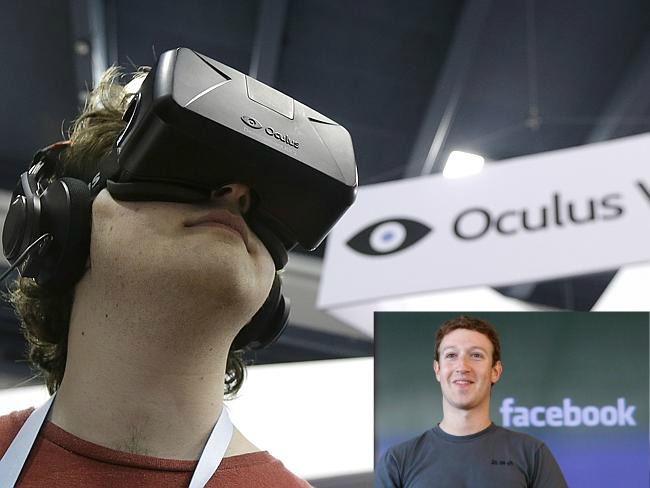
Facebook recently acquired Oculus VR for $2billion – will healthcare feature in future plans?

#notagame

However the promise for VR in healthcare and indeed beyond it’s gaming roots is a compelling one.

After all, rules that are stretched and technology that gains use beyond it’s intended usage is potent.

And yet for all last week’s #notagame I was struck by comments received in private by tech editors in relation to this announcement, declining to cover it.

I’m unsure if that’s Valley nimbyism, a friday sub optimal announcement timing, the fog of football, or if tech reporting decidingly lapses to potato salad level of reporting in some quarters.

Read coverage of Patient Healthcare with Virtual Reality from MD+DI. En español, lea la cobertura de la noticia en El Confidencial, Las Provincias, Real o Virtual.

MedicAR – Surgical Glassware with Augmented Reality at Stanford University Medical Center

Thursday

13

Mar

Augmented Reality with Google Glass for Surgeons

Augmented Reality with Google Glass for Surgeons

Droiders, an official Google Glass applications development start-up, today launched MedicAR, a new application which combines augmented reality and Google Glass™ to improve the simulation and teaching of certain procedures in surgery and patient care.

The MedicAR application also represents a potential new aid to improve safety issues in surgical interventions, especially for common procedures among junior surgeons and even for uncommon ones among experts.

During a recent demonstration, Dr. Homero Rivas, assistant professor of surgery (digestive surgery) and director of innovative surgery at Stanford University, connected the wearable device from Google to Droiders’ MedicAR application, and using an anatomical human model, performed an open reduction and internal fixation of a left complex clavicular fracture.

The demonstration took place in the Goodman Simulation Center at Stanford. A video of the MedicAR demonstration is available here:


Featuring Dr. Homero Rivas, Assistant professor of surgery and director of innovative surgery at the Stanford University Medical Center.

Video Transcript

This video will show the use of Glass and augmented reality in the operating room. 
 
This is a fascinating technology that we’ve already implemented on mobile phones, especially with simulation and teaching and now it’s being implemented on wearable technology such as Glass.
 
This requires a target sign that can be tattooed on a patient skin along with the Droiders’ software of augmented reality for Glass.
 
The surgeon and assistant can direct their Glass to the target sign and the augmented reality will show up on their screen showing all aspect of a given surgery.
 
Step by step procedures will be clearly shown, from skin incision to the use of retractor to give adequate exposure, identification of critical anatomical structures, the core surgical treatment and then the closure of the incision.
 
The use of augmented reality on Glass is truly a game changer on simulation and live teaching, inside and outside the operating theatre. Not only this, but it also represents a unique aid to improve safety issues, especially for common ones among juniors surgeons and even for uncommon procedures among experts.
 
Additionally customization of augmented reality can be implemented on individual patients created from their own imaging studies in order to plan and execute more accurate and safer surgical procedures.


There are countless applications for Glass and augmented reality in healthcare.

Dr Homero Rivas

Dr Homero Rivas – Stanford University Medical Center

The MedicAR application requires a target to be temporarily tattooed on the patient’s skin.

The surgeon and his assistant then direct their Glass to the target, which reveals the augmented reality on their screen, showing all aspects of a given surgery.

Afterwards, procedures are clearly displayed step by step.

For example, it could start by displaying the skin incision, the use of retractors to provide adequate exposure of the area, the core surgical treatment and finally the closure of the incision.

The project we are revealing today was the next logical step in our collaborative efforts with Dr. Rivas. We teamed up last summer to perform a transatlantic live-streamed operation through Glass, a first in telemedicine at the time, using our own streaming solution.

Julian Beltran

Julian Beltran – founder of Droiders

Shortly after, we were among the very first Glass developers to introduce augmented reality into Glassware

Droiders’ MedicAR application for Glass uses Qualcomm® Vuforia™, a software platform that enables apps to see and connect digital experiences to physical products.

A Global and Interactive Operating Room Through Google Glass

Wednesday

18

Sep

For those who yesterday missed the world’s first master class through Google Glass, or want to see it again, click here to watch it on Youtube. Audio starts at the 20 minute mark.

Dr. Pedro Guillén performed successfully an operation, an autologous chondrocyte implant, from the Cemtro Clinic, in Madrid, a medical master class. Droiders live streamed this operation through our Google Glass with our pioneering streaming system for this device, Glassters Streamer, broadcasting the event online for everyone interested.

Almost 300 universities and hospitals worldwide watched the Master Class live in a private session that allowed them to participate with their input, using Hangouts from Google, and high definition video from Telefónica.

Media outlets from all over the world have featured this event. Here is Antena 3 News:

¿Have you recognized our CEO, Julián Beltrán, in closeup wearing our Google Glass?

Pioneering Surgery for Medical Education Through Google Glass Next Tuesday

Wednesday

14

Aug

Droiders works once again with Dr. Pedro Guillén and the Cemtro Clinic on a pioneer surgery project through Google Glass, in collaboration with Google and Telefónica. The Google Glass event is an interactive master class where, for the first time in History, Google Glass will be used for tele-education, with active participation from its audience.

Hospitals and universities will be able to learn, for the first time, two pioneer techniques through Glass, watching the first person perspective of Dr. Guillén while he is performing them. The surgery procedures are autologous chondrocyte implant and wireless arthroscopy . They will be streamed via Google Glass thanks to Glassters Streamer, the streaming system for Google Glass developed by Droiders.

Dr. Guillén will offer this class live to 300 hospitals and universities around the world with the active participation from the audience. Two prestigious surgeons from EEUU and Europe will connect with him live through Google Hangouts to offer their input and comment during the surgery´s development. To participate as medical professionals or students in this event, please contact the Cemtro Clinic www.clinicacemtro.com. Thanks to Telefónica, the 300 terminals from these hospitals and universities will be able to receive the video signal in HD, with three different screens showing three video transmissions: the one from Google Glass, one from inside the knee recorded with the wireless arthroscopy, and another recording a different perspective of this surgery.

To everyone else interested, this event will be streamed here, on the Droiders website, live this Tuesday from 4:00 to 6:00 p.m. (CEST). .

Dr. Guillén performing a surgery with our Google Glass.

Dr. Guillén performing a surgery with our Google Glass.

Here´s the press release about this event in English:
Press release Google Glass Master Class Sept 17th

A New Kind of “Glasses” for Ophthalmology

Monday

29

Jul

Last Saturday Droiders had the chance to study with Dr. M.G. Marcos possible Google Glass applications for Ophthalmology, at the Marcos Ocular Institute, in Málaga, Spain.

Doctor Marcos studies Google Glass´ medical applications

Doctor Marcos studies Google Glass´ medical applications

This institution has been the first ophthalmology centre in the world to see the advantages that Google Glass offers in this field. Thanks to Droiders, Dr. Marcos could experience first hand the advances that this device will bring in the upcoming months.

Multiple uses in surgery for Google Glass.

Multiple uses in Surgery for Google Glass.

According to the doctor, Google Glass will be very useful for telesurgery, telemedicine, medical divulgation, facial recognition, etc. In this sense, he points out the cases of laser surgery for short-sightedness, or long-sightedness patients. Google Glass allows in real time to divulge and share the operation. The surgeon is able to consult the patient´s medical files, can ask for advice from any doctor who is connected to his feed, and can search for data on the Internet, all in real time while operating. Dr. Marcos was impressed to see that the viewfinder doesn´t interfere with his field of vision, and hopes to use the glasses in his future operations. Very soon, Doctor!

 Doctor Marcos wears Droiders´ Google Glass

Doctor Marcos wears Droiders´ Google Glass