Paul Gailey Alburquerque

Inbound Marketing Glassware for Brands. – Find me on Twitter: @paulgailey or Google Plus: paulgailey.com/+

Author Archives: Paul Gailey Alburquerque

Virtual Reality Patient Healthcare is Not a Game

Monday

14

Jul

The fruits of many an unexpected invention accompany us everyday.

The inventions of medical scientists, pioneers and visionaries are responsible for items such as X-Rays, Penciliin, Viagra, Listerine, Propecia, and the Pacemaker to name a few.

It’s a phenomenon not limited to the medical field, take for instance the discovery of Saccharin, Dynamite, Matches, Coca-Cola, and Microwave Ovens.

Indeed technology does not need to be limited to the inventors original intended use for it to become inspiringly useful by enterprising users.

Inventors of the technology often understand that it’s the nascent users and developers who will test, experiment, break and fix things in the process of discovering expanded potential of their invention.

Clinical use of Oculus VR

In a non gaming use of Virtual Reality, the Hospital Perpetuo Soccorro last week took the bold step of publically trialling this gaming technology to appease operative anxiety for a patient under local anaesthic.

While VR is not a substitute for local anaesthetic, in this scenario the patient was greatly assisted by the calming effect of listening to Mozart while being immersed in a super moon lit beachside paradise, gazing up at distant fireworks.

To underline the commitment to new technology, the hospital – which is also combining Doctor’s access to EHR with wearables such as Google Glass – POV streamed the operation through Google’s infamous wearable smart glasses to YouTube.

All while the doctor conducted a knee arthroscopy in the operating theatre with all the inevitable accompanying local environmental stress that typically entails for a patient.


Contrast the stark physical reality of a classic functional hospital ward where we entrust professionals to attend to our health with the comforts of a typical spa where our wellbeing and feel good factor is of paramount importance.

Virtual Reality can go some way to bringing those worlds together and having a positive clinical benefit to the patient.

Clinical Pain Management

According to Fortune, in a collaboration with Stanford’s Department of Anaesthesia, Jeremy Bailenson, director of Stanford University’s Virtual Human Interaction Lab, Virtual Reality technology was used to place children with chronic regional pain syndrome (CRPS) — a disease characterized by severe pain, swelling, and changes in the skin – in virtual simulations that divert their brains from unpleasant physical therapy and treatment distracting them from processing pain signals.

Such research is by no means recent. The University of Washington Seattle and U.W Harborview Burn Center have been exploring the immersive virtual reality pain distraction since the early 1990′s.

Droiders last week also launched Glassware for dentists (spanish version), where once again the hands free contextual unobtrusive line of sight information, is proving highly beneficial to dental professionals.

In this instance the Oculus VR was not featured for the patient as there are practical issues, however other researchers have shown recently that other Virtual Reality headsets can have a clinical advantage in dentistry.

When technology breaks out of from it’s crowdsourced origins it frequently attracts critiscm from many quarters as witnessed with the recent acquisition of Oculus.
asdasd

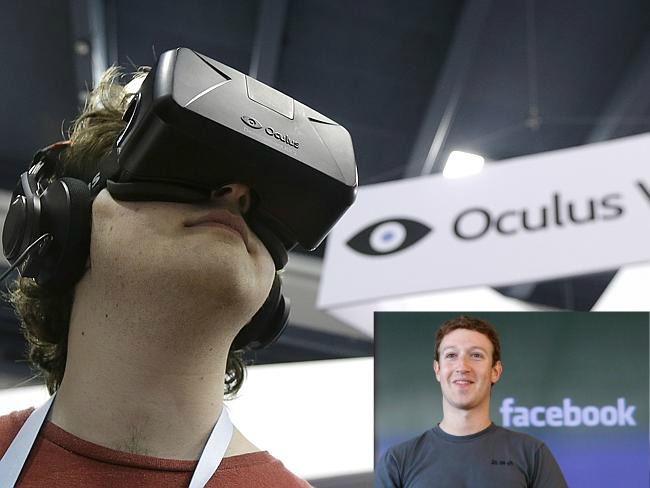
Facebook recently acquired Oculus VR for $2billion – will healthcare feature in future plans?

#notagame

However the promise for VR in healthcare and indeed beyond it’s gaming roots is a compelling one.

After all, rules that are stretched and technology that gains use beyond it’s intended usage is potent.

And yet for all last week’s #notagame I was struck by comments received in private by tech editors in relation to this announcement, declining to cover it.

I’m unsure if that’s Valley nimbyism, a friday sub optimal announcement timing, the fog of football, or if tech reporting decidingly lapses to potato salad level of reporting in some quarters.

Read coverage of Patient Healthcare with Virtual Reality from MD+DI. En español, lea la cobertura de la noticia en El Confidencial, Las Provincias, Real o Virtual.

The coronation of Felipe VI with Glass for RTVE #throughglass

Wednesday

18

Jun

Droiders launches a world first with the application to view Television on Google Glass developed for the RTVE group. (Radio Televisión Española)

As from now you can view television on this new device and everyone who is fortunate enough to have the smartglasses from Google can be witness to the coronation of Felipe VI with TVE and the application rtve for Glass.

Copyright ABC

Copyright ABC

The application offers four channels belonging to the group: La 1, La 2, TDP (sports) and the Canal 24 horas and all channels will live broadcast this historic event of such importance for our country.

This pioneering initiative with RTVE hails the start of a new way of communicating and consuming media. Wearable technology is the next wave in the adoption of everyday technology that surrounds us and thanks to that we can now enjoy the classic medium through the most innovative device.

RTVE has become the first multi device media broadcaster. Now it’s a reality to be able to view television through any device and reach any audience in any place.

Do you want to load the RTVE.es Glassware?

If you have Google Glass, you can load up the RTVE.es Glassware and enjoy Spanish television on Google Glass.

rtve for Glass - Get It On GLASS

Droiders develops the first application in the world to view television on Google Glass for RTVE (Radio Televisión Española) #throughglass

Wednesday

18

Jun

Droiders has developed the first application in the world to view Television through on Google Glass for RTVE (Radio Televisión Española) #throughglass.

logo RTVEes

Thanks to TVE hedging their technological bets and placing their faith in Droiders to produce this application, we have reached a technological milestone. As a first for the media industry we are able to offer multi device content: from traditional television, to computer, to smartphone, to tablets and now on Google Glass.

This video shows the content available as of today #throughglass


Wearable technology is upon us producing a revolutionary effect in society by manifesting itself in our daily lives. The smartglasses from Google are just a first step.

You could be on a train or a plane journey, pop on your Glass and watch from any of the TVE channels: La 1, La 2, TDP and Canal 24 horas at any time of the day.

It’s very easy to use: you only have to load up the application, select the channel you want to view and click play. Simple as pie.

Do you want to load the RTVE.es Glassware?

If you have Google Glass, you can load up the RTVE.es Glassware

rtve for Glass - Get It On GLASS

Manolo El del Bombo #throughglass

Sunday

08

Jun

Everyone in Spain knows Manolo el del bombo. But when you are 6,000kms from the motherland and everyone is trying to snatch a picture with the Spanish Football team most famous fan, that’s when you truly realise the pull this fellow really has.


Manuel Cáceres Artesero, better known as “Manolo el del bombo”, has spent some 40 years drumming up support for the national team as he himself admits. In that time he has become known as the most familar face of the national team and recent success of the team has catapulted his popularity.

We were witness #throughglass to the #LetsGoFootball fever that he generates, in this case, in Washington DC this week.

ps. There’s a fine piece, albeit a few years old, in more detail about Manolo el del Bombo in Sid Lowe’s report in The Guardian.

Washington supports La Roja

Sunday

08

Jun

Ahead of the squad’s game against El Salvador, we had the opportunity to savour the atmosphere among visting RFK stadium USA fans of the Spanish Team in Washington DC during the training session.


There were long queues and lots of expectation in the air around the stadium. The youngest supporters stood out among the fans as the most excitable had queued from early on to catch a glimpse of their idols.

These american children, of spanish parents, have a passion and a love of colour worthy of any national supporter. La Roja has transcended borders and everyone wants to be part of the success of our team.

We took the opportunity to have chat with them and ask for their support to the Spanish squad #throughglass #LetsGoFootball.

Multi Google Glass Interview with Juanma Castaño #LetsGoFootball

Friday

06

Jun

Last monday on the official flight with the Spanish National Football Team from Spain to Baltimore, USA, we held a friendly interview with the journalist Juanma Castaño weighing up the chances of la Roja for the World Cup.

And why not, we both conducted the interview #throughglass.


Of course, it will not be the first time we talk pure football over the next few weeks.

If you want to get on aboard with us, stay tuned to the hashtag #LetsGoFootball y #LaSeleccionPorDentro both on Google+ as in Twitter and via the Twitter account of our Droiders embedded Glass Explorer Reporter, Alejandro Loza @alesonline.

Transcription multi Glass de #letsgofootball nº1

Due to the noise levels on the plane, we will leave you with a transcription of the conversation.

AL – ¿Do you feel the players are tensed up, that they are stiff, which is what you just said, that all that pressure is on their shoulders and it seems you meant to say that it wouldn’t be a failure to not win this World Cup, do you sense that?

JC – No, I think they are still in the mode of how their team season has been, it’s been really tough for all involved, and I suppose that from now they will get in the World Cup groove, but I don’t think the pressure affects them that much as they come from big clubs, they are very used to that, I think in that respect they are well rehearsed to it.

AL – Alright, and the last one, what is your precidction for the group stage, as we’ve got the group of death?

JC – Well, everyone says that the danger is Chile, so I’ll go along, that the danger is Chile, I don’t know, in my mind we are better than Holland that’s for sure…

AL – Have you thought anything of Van Gaal, some tactic, something that they’ll do just against us?

JC – Holland is, based on what we’ve seen, far worse than the Holland of the last World Cup final, and Spain isn’t not much worse than that World Cup Final. Chile is an unknown, and Australia is well inferior, I think that in the group stages, we shouldn’t have any problems, in theory, but it’s very importatnt to start off well, eh.

AL – Do you think the team that yields a point to Australia will be the one of three that get’s left behind?

JC – That’s a possiblity, but I trust that we win the first game against Holland because that will inevitably give you…

AL – Will set the cast…

JC – Yeah, to win the first game gives you…a real boost

AL – OK, then top of the group..

JC – For sure, if only..

AL – Alright then

JC – Cheers.

¡WHACK!

Droiders accompany the Spanish Football squad during the tournament in Brazil

Friday

30

May

We have some big news to reveal and an adventure to share.

Droiders, pioneer in the development of software for Google Glass, known as Glassware, will attend the forthcoming World Cup held in Brasil.

Our journey starts with a friendly in Seville, 30th May, then onwards to Washington for another friendly and hope the journey ends on 13th July with a second world title for our national squad.

At the same time SeFutbol will bring the event that much closer to the fans with Google Glass. The content captured through Glass will be published on the Google+ page of the national team.

© Copyright RFEF

© Copyright RFEF

The day to day life of the World Cup champion squad will be documented during the most important football event on the planet ever witnessed.

World Cup tournament Calendar with Droiders

In addition we have a calendar of actions lined up with Google Glass full of surprises that we will reveal on this blog giving you the full inside story.

Furthermore we will support the hashtag #LaSeleccionPorDentro, so fans can have the opportunity to send through their questions about pictures, videos and other that we publish wearing Google Glass.

For example, players changing rooms, arrivals at different venues, training sessions, pre and post game moments, etc.

Readers of this blog will enjoy preferential access for such requests as we have devoted a separate server alone to be up to the task and travel with SeFutbol during the whole tournament and the friendly warm up stage.

So if you’re curious to get up close with the Spanish squad and pose a question to the champions, use the comments to send me your requests and I will pass them directly only ;) #throughGlass.


As you can imagine I will generate exclusive content for this blog on Droiders and their readers. I hope to bring your the best inside perspective via Google Glass and show you never before seen angles and coverage that ordinary media cannot obtain.

I will be the official Droiders reporter during the summer football tournament.

The journey has already begun, and as I write I am in the AVE en route to Sevilla with the Team to take part in the friendly to be played today, 30th May in the stadim Sánchez Pizjuan in the Andalucian capital.

As a taster I will leave you with this exclusive video of the arrival of the players to the Santa Justa station where I held a brief chat with the journalist from “Radio Marca” Javier Amaro, who recently has published a book writtern with four other journalists about Don Vicente del Bosque.


Follow the daily goings on of La Roja from this blog, you’ll be in for a surprise.

Vaso – for optimists/pessimists everywhere

Tuesday

01

Apr

Life is full of uncertainties.

The ever debated question of which came first: the chicken or the egg, proof of primordial gravitational waves, 42, and other cosmogenic theories.

Then there’s the glass of water, filled halfway: Is it half empty or half full?

Developing Performing Apps at Droiders is more than a daily exercise of contemplating such profound philosophical matters.

Vaso – more than code

That’s why we’re proud to announce our latest app, Vaso, a practical solution for Voyagers – as Vaso users are known – in need of defining the status quo.

Vaso accurately measures the volume of liquid contained in a glass and returns a percentage fill readout in a gauge display #throughglass.

Vaso unequivocally answers one of life’s most frequently asked questions that has long since puzzled mankind.


Vaso – serving dual audiences

Feedback from Vaso beta testing sessions has proved crucial for iteration of the app.

The production release of Vaso incorporates that feedback and therefore caters for two distinct audiences.

A Droiders spokesman explains:

Vaso version 0.5 – at the time it was codenamed ‘half’ – proved to be divisive in testing, as about 50 per cent of our control group commented that the gauge label readings were consistently inaccurate.

.. it wasn’t so much the calibrated unit centilitres measurement – which was exhaustively verified – but the terminology of the label that the vasoware displayed of ‘full’ which produced all sorts of disputes among the group of early Voyagers.

Solving the outlook for Vaso

Designers from Droiders adroitly addressed the issue by introducing a ‘settings’ menu allowing the Voyager to configure either pessimist or optimist mode.

This switch ingeniously inverted the scale of the gauge and simultaneously swapped the text labels of ‘empty’ and ‘full’.

This satisfied both sets of Voyagers whilst maintaining the overall accuracy and integrity of Vaso.

Vaso philosophy

Therein lies the beauty of this vasoware because Vaso is much more than just an innovative way of understanding the fill level of a glass of liquid.

How you set up Vaso is a statement of your outlook on life.

This slideshow requires JavaScript.


This is vasoware. And for pessimist and optimist Voyagers everywhere, it’s a symbol of individuality and a belief in personal freedom.

Vaso logic

Vaso is another world first for the team at Droiders based in Europe.

Vaso achieves a high degree of accuracy due to Advanced Processing Realtime Infrared Logic, as devised by Droiders Labs.

The Vaso 50% challenge

So how does Vaso function when faced with a glass with a 50% fill level?

To satisfy both pessimists and optimists, Vaso currently returns a ‘half’ reading, irrespective of the user’s setting.

Crowdsourcing the conundrum

Developers at Droiders remain keen however to tap the wisdom of the crowds to answer the universal conundrum:

Vaso – a clear future ahead

There are compelling opportunities for vasoware deployed in the industrial sector, with the prospect of large scale, hands free, liquid volume inspections.

A retailer version for hospitality business owners to calculate serving yields of alcoholic stock is also being evaluated for commercial demand.

Market research however is strongly suggesting that a consumer vasoware may prove most popular among value for money minded patrons verifying levels of their tantalisingly served beverages.

Mark Anderson of the Windmill Pub

Can I have a top up? – © Mirror

Indeed advanced vasoware could hail the end of disagreements between bar staff and patrons regarding filled levels of served drinks or satisfy trading standards officers who currently can only act at thresholds south of 95%.

Wine glass fills and beer foam complexity

The performance of Vaso with a glass of water is relatively straight forward compared to the challenges of wine, which is typically not served to the brim.

This poses a problem for Vaso interpretating wine fill level deficiencies outside of the lab where beverage conditions are highly varied.

The Piaget Beer Gauge

Piaget Beer Gauge – analogue predecessor to Vaso © Chris Holloway

Beer also has a fiendish trait, frequently presenting foam ratio detection issues, renowned for disrupting the “empty” and “full” scores which can lead to volatile readouts.

“Beer is notoriously tricky… “, states a Droiders spokesperson, and the phenomenon of under serving is indeed a serious matter.

Past efforts to combat tavern injustice include the Piaget Beer Gauge, from the federal research physicist Chris Holloway, whose analgoue invention deploys a mathematical formula in the form of a card to save punters thousands of otherwise lost sips every year.

thebeergauge.com formula - the analogue predecessor of Vaso

For the new era of wearable tech however, Droiders trust that with the release of Vaso today, Voyagers everywhere, pessimists and optimists, will be willing to reach out to us to gather big liquid data, and solve these matters by field testing Vaso in bars everywhere.

FAQ

Is Vaso waterproof?

Yes.

Who is Piaget?

Originally a malacologist, Jean Piaget was a Swiss development psychologist and philosopher who studied humans’ inability to distinguish identical volumes in different sized containers.

When will Vaso being available in Spain?

We expect Vaso to be released in Spain just before the end of the year.

What does Vaso really mean?

Why not search for Vaso, or allow us to look it up for you?

Can I ask you a technical question about Vaso?

No, that’s enough questions. Move along now.

MedicAR – Surgical Glassware with Augmented Reality at Stanford University Medical Center

Thursday

13

Mar

Augmented Reality with Google Glass for Surgeons

Augmented Reality with Google Glass for Surgeons

Droiders, an official Google Glass applications development start-up, today launched MedicAR, a new application which combines augmented reality and Google Glass™ to improve the simulation and teaching of certain procedures in surgery and patient care.

The MedicAR application also represents a potential new aid to improve safety issues in surgical interventions, especially for common procedures among junior surgeons and even for uncommon ones among experts.

During a recent demonstration, Dr. Homero Rivas, assistant professor of surgery (digestive surgery) and director of innovative surgery at Stanford University, connected the wearable device from Google to Droiders’ MedicAR application, and using an anatomical human model, performed an open reduction and internal fixation of a left complex clavicular fracture.

The demonstration took place in the Goodman Simulation Center at Stanford. A video of the MedicAR demonstration is available here:


Featuring Dr. Homero Rivas, Assistant professor of surgery and director of innovative surgery at the Stanford University Medical Center.

Video Transcript

This video will show the use of Glass and augmented reality in the operating room. 
 
This is a fascinating technology that we’ve already implemented on mobile phones, especially with simulation and teaching and now it’s being implemented on wearable technology such as Glass.
 
This requires a target sign that can be tattooed on a patient skin along with the Droiders’ software of augmented reality for Glass.
 
The surgeon and assistant can direct their Glass to the target sign and the augmented reality will show up on their screen showing all aspect of a given surgery.
 
Step by step procedures will be clearly shown, from skin incision to the use of retractor to give adequate exposure, identification of critical anatomical structures, the core surgical treatment and then the closure of the incision.
 
The use of augmented reality on Glass is truly a game changer on simulation and live teaching, inside and outside the operating theatre. Not only this, but it also represents a unique aid to improve safety issues, especially for common ones among juniors surgeons and even for uncommon procedures among experts.
 
Additionally customization of augmented reality can be implemented on individual patients created from their own imaging studies in order to plan and execute more accurate and safer surgical procedures.


There are countless applications for Glass and augmented reality in healthcare.

Dr Homero Rivas

Dr Homero Rivas – Stanford University Medical Center

The MedicAR application requires a target to be temporarily tattooed on the patient’s skin.

The surgeon and his assistant then direct their Glass to the target, which reveals the augmented reality on their screen, showing all aspects of a given surgery.

Afterwards, procedures are clearly displayed step by step.

For example, it could start by displaying the skin incision, the use of retractors to provide adequate exposure of the area, the core surgical treatment and finally the closure of the incision.

The project we are revealing today was the next logical step in our collaborative efforts with Dr. Rivas. We teamed up last summer to perform a transatlantic live-streamed operation through Glass, a first in telemedicine at the time, using our own streaming solution.

Julian Beltran

Julian Beltran – founder of Droiders

Shortly after, we were among the very first Glass developers to introduce augmented reality into Glassware

Droiders’ MedicAR application for Glass uses Qualcomm® Vuforia™, a software platform that enables apps to see and connect digital experiences to physical products.

Pilot School Adventia, first in the world to fly with Google Glass

Monday

10

Mar

Adventia, European Collage of Aeronautics this morning has become the first airline company to carry out a flight with Google Glass, and also the first school in the world to use this type of device in pilot training.

This demonstration has taken place as part of the Pilot Innovation Day and the first conference on “Innovation in the Cockpit”, organized by Adventia, Participating Centre of the University of Salamanca at the Aeronautical Campus at Matacán, Salamanca, Spain.

With the aim of improving flight instruction and training the best pilots, Adventia, along with Droiders, official Google developer, have created a Checklist Glassware (an application for Google Glass) for pilot use.

Viewing on a mobile device, cannot see it? Try this photogallery version.
For more information, please visit www.firstgoogleglassflight.com

Press Release